
Financing a business often comes down to two essential options: short-term or long-term . Both aim to help you access funds, but the right choice can influence everything—from cash flow to growth plans.
This guide explores the nuances and strategic uses of both financing types. If you’re a business owner, aspiring entrepreneur, or simply curious about funding dynamics, you’ll find insights here to help navigate your financial decisions.
Understanding Short-Term and Long-Term Financing
Before diving deeper, it helps to clarify what distinguishes short-term from long-term financing. Each fits specific purposes, timelines, and risk profiles.
Short-Term Financing Explained
Short-term financing refers to funds typically borrowed for less than a year. It’s commonly used to address immediate cash needs, like purchasing inventory or covering unforeseen expenses.

- Examples: Business lines of credit, invoice financing, and merchant cash advances
- Repayment periods may vary, but rarely exceed 12-18 months.
Long-Term Financing Defined
Long-term financing generally extends beyond a year—sometimes spanning five, ten, or even 30 years. Businesses select this route for larger investments, such as equipment, real estate, or major expansion projects.
- Examples: Commercial mortgages, equipment loans, and term loans
- Repayment is typically spread out over several years, making installments more manageable.
Key Differences: Short-Term Versus Long-Term Financing
The main difference lies in the duration of repayment and the purpose behind the borrowing. But the distinction goes deeper—affecting costs, risks, and even your strategic choices.
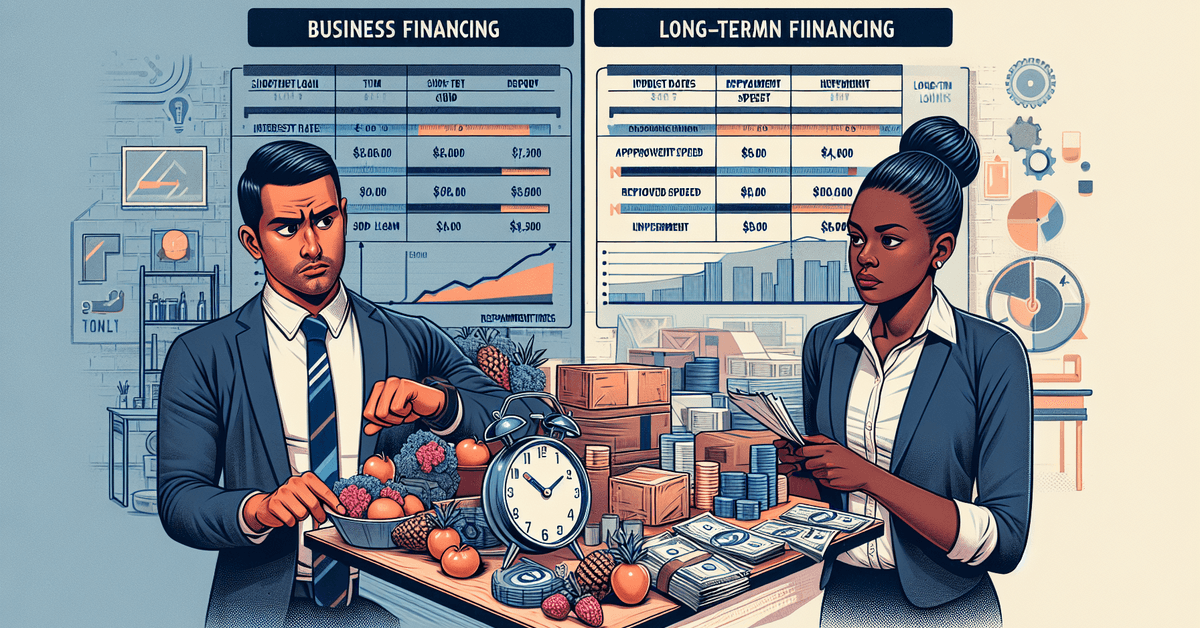
| Factor | Short-Term | Long-Term |
|---|---|---|
| Duration | Less than 1 year | More than 1 year |
| Purpose | Working capital, urgent needs | Growth, asset purchases |
| Interest Rates | Usually higher | Usually lower |
| Approval Time | Faster | Slower |
| Repayment Size | Larger, frequent | Smaller, spread over time |
| Risk to Borrower | Potentially higher default risk | Less frequent risk, slower payoff |
When Short-Term Financing Makes Sense
Not every business scenario calls for a long commitment. Sometimes, speed and flexibility matter more than low interest.
Managing Cash Flow Hiccups
Perhaps a supplier payment comes due before your customers pay you. In these cases, a line of credit might bridge the gap, easing stress without impacting long-term finances.
Taking Advantage of Opportunities
If there’s a chance to buy discounted inventory or launch a limited-time campaign, short-term funding can help seize these brief opportunities—assuming you can repay quickly.
Building Credit History
Some small businesses start with shorter, smaller loans to establish good credit relationships. Even if the cost is higher, this opens doors to more substantial funding later on.
Why Long-Term Financing Might Be the Better Bet
For larger, foundational investments, long-term financing often aligns better with a business’s growth plans. But there are other angles worth considering as well.
Spreading Out Large Expenses
Perhaps you’re expanding to a new location. The upfront costs may be high, but spreading repayment over years relieves pressure, leaving operational cash free for daily needs.
Lower Payments, More Predictability
Fixed, scheduled payments over a long period make budgeting easier. That consistency—a kind of security—can be helpful for strategic planning.
More Favorable Interest Rates
Banks and lenders generally offer lower rates on long-term loans, simply because the perceived risk is less. This could mean significant savings, although there are exceptions.
Choosing the Right Financing Strategy: Points to Consider
Every business is different. What works for one, might feel risky for another. Several variables shape the optimal approach:
- Business stage: Startups may only qualify for short-term credit at first, while established companies can access longer-term funding.
- Amount needed: Modest sums are often short-term; major capital expenses tend to require longer terms.
- Repayment ability: Realistically assessing cash flow avoids overextension.
- Opportunity cost: Weighing immediate gains against long-term impact can clarify the tradeoffs.
Potential Risks and Cost Considerations
With any funding, it seems there’s always a tradeoff. Flexibility might come at a higher price, while savings might mean longer obligations. It’s easy to overlook fees, repayment schedules, and even personal guarantees, yet these shape total costs and risks.
Interest Rate Fluctuations
Most short-term options carry variable rates, exposing you to sudden increases—sometimes unexpectedly.
Collateral and Personal Guarantees
Some lenders require business assets or even personal property as security. Being aware of what’s at stake helps manage risk—they’re not just numbers on paper.
How Lenders Decide: Approval Factors
Lenders weigh several things when considering your application. General rules apply, but criteria shift by lender and loan type.
- Credit score and history: A reflection of financial discipline—or perhaps just past misfortune.
- Business revenue and profitability: Lenders look for consistency, though it isn’t everything.
- Collateral on hand: Assets, inventory, or real estate can smooth approval but aren’t always necessary.
Somewhat unfairly, new businesses often face stricter standards. But showing readiness and transparency can sometimes tip the scales your way.
Examples of Reputable Financing Platforms
The financial services world is vast, with hundreds of platforms—each with pros and cons.
- Kabbage : Quick approvals on lines of credit
- Lendio : Marketplace model to compare loan offers
- SBA (Small Business Administration): Government-backed long-term loans
- Bank of America Small Business: Traditional lending solutions
For an overview of alternative finance, check out our guide to Alternative Business Loans: Pros and Cons .
Frequently Asked Questions
Sometimes the nuances raise more questions than answers. Here are a few that tend to come up again and again.
- Can I mix both types? Many businesses blend short- and long-term loans. For example, using a line of credit for daily needs and a term loan for growth.
- What’s easier to qualify for? Short-term loans typically have simpler requirements, but costs can be higher.
- Is early repayment possible? Usually, yes. However, watch for fees or penalties—these can offset the benefits of paying off quickly.
Recap and Next Steps
Finding the right blend of short-term and long-term financing often means knowing your business needs, your risk tolerance, and your market timeline. Each approach has a place; the challenge is matching tools to goals.
Exploring options carefully, understanding the fine print, and leaning on trustworthy advisers or resources can make all the difference as your business grows.