
When it comes to renovating or upgrading one’s home, the funding choice can be as important as the design or materials.
For many, fixed-rate loans for home improvements are an appealing option, offering a sense of predictability and structure. But what exactly are these loans, and why do some homeowners gravitate toward them?
This article is designed for homeowners, DIY enthusiasts, or anyone considering a significant update to a residential property.
The focus is on providing clear, reliable answers about fixed-rate loans—what they are, when they make sense, and what one should consider before choosing this route.
The main benefit: clarity and confidence in a topic that can otherwise seem full of financial jargon and fine print.
What Are Fixed-Rate Loans for Home Improvements?
A fixed-rate loan means the interest rate remains unchanged throughout the entire repayment period. Whether borrowing to remodel a kitchen, build an extension, or add solar panels, the predictability these loans offer can help with budgeting, especially when costs elsewhere keep fluctuating.
Unlike variable-rate loans, where payments might rise or fall as economic factors shift, a fixed-rate option locks a borrower into one set of repayments.
It’s a structure that can offer both security and peace of mind, particularly for long-term projects.
How Do Fixed-Rate Home Improvement Loans Work?
Usually, these loans are personal loans or home equity-based products. Once approved, the lender provides a lump sum—often within days.
Borrowers then pay back the loan in monthly installments, with each payment containing a mix of interest and principle.
The main distinction: the interest amount never changes, so the repayment amount stays consistent from the first bill to the last.
Loan terms may vary. Some run for just two years, while others stretch to a decade or more, depending on the lender and need.
For those seeking a simplified way to finance a renovation, this approach can remove much of the uncertainty.
Why Choose a Fixed-Rate Loan for Home Improvements?
Certainty in Monthly Payments
Perhaps the biggest reason: predictable monthly payments . Knowing exactly how much will be due each month can help homeowners manage a household budget without surprises. That’s particularly comforting if income is steady but expenses need careful tracking.
Protection Against Rising Interest Rates
Interest rates rise and fall for many reasons—sometimes unpredictably. With a fixed-rate loan, there’s no risk that payments will increase if market rates surge.
This can relieve anxiety for those who plan to stay in their home, or with their loan, for several years.
Simplified Financial Planning
Trying to estimate the total project cost? A fixed-rate loan lets borrowers project exactly what the loan will “cost” over time, down to the dollar. There are no sudden adjustments needed if the wider economic climate changes.
Types of Fixed-Rate Loans Used for Home Improvements
Personal Home Improvement Loans
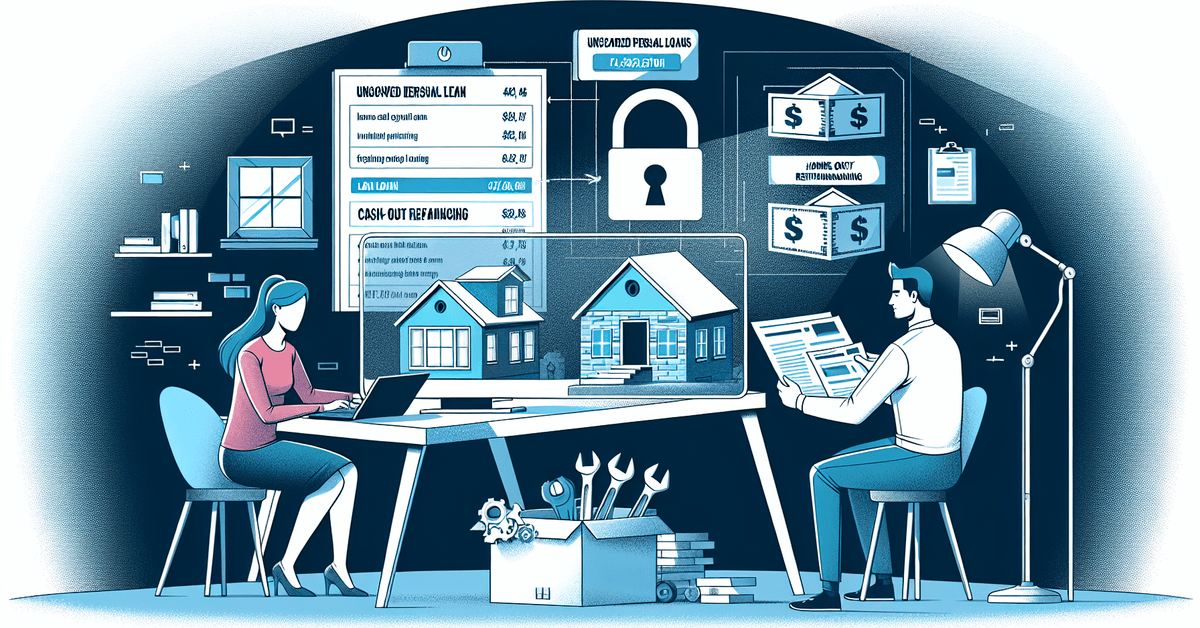
Some lenders offer unsecured personal loans specifically for renovations. These typically don’t require collateral, though they may have higher interest rates.
Approval is often fast, and the funds can be used for nearly any improvement—from roofing to landscaping.
Home Equity Loans
A traditional home equity loan is secured against the value of a property. In most cases, this allows for a lower interest rate than unsecured loans.
Repayment terms are usually fixed and range from five to 20 years. The risk? If payments aren’t made, foreclosure is a possibility.
Cash-Out Refinancing
Some homeowners refinance their existing mortgage and take out extra cash for home improvements.
In this way, they lock in a new fixed rate for the entire mortgage, sometimes extending the loan term but giving access to potentially larger sums at home-loan rates.
| Loan Type | Collateral | Interest Rate | Repayment Terms |
|---|---|---|---|
| Personal Loan | None | Usually higher | 2–7 years |
| Home Equity Loan | Home | Lower, fixed | 5–20 years |
| Cash-Out Refinance | Home | Variable or fixed | Varies (usually up to 30 years) |
An image showing before-and-after renovation can be a helpful visual, along with an infographic to illustrate the predictability of fixed versus variable payments.
Eligibility and Application Process
Eligibility for a fixed-rate home improvement loan depends on a few factors. Lenders typically assess credit scores, income stability, debt-to-income ratios, and (for equity loans) property value.
The application process varies, but many major banks and credit unions—along with online lenders—offer quick prequalification tools.
Some official resources, such as The Consumer Financial Protection Bureau, explain how different loan offers and lenders work. Comparing options—perhaps via a comparison table—can help clarify choices.
Potential Drawbacks and Considerations
Like any financial product, fixed-rate loans have pluses and minuses. Interest rates for these loans can be higher compared to introductory variable rates or lines of credit.
That said, if interest spikes unexpectedly, fixed-rate borrowers may ultimately pay less over time.
Some lenders charge origination fees or penalties for paying off a loan early. And, of course, with home equity loans or refinancing, putting the home at risk is a significant trade-off.
Some homeowners feel hesitation about this, preferring unsecured options even at a higher cost.
Fixed-Rate Loans vs. Other Financing Options
- Variable-Rate Loans : Payments might start lower, but can increase if rates rise.
- Credit Cards : Best for small projects; rates fluctuate, and minimum payments can create long repayment timelines.
- Home Equity Line of Credit (HELOC) : Interest only paid on what’s used, but rates change and payments may become less predictable.
A side-by-side chart or graph may be useful here, visually comparing average monthly payments for each lending method over time.
Tips for Choosing and Using a Fixed-Rate Home Improvement Loan
- Compare offers from at least three reputable lenders; look at rates, fees, and repayment terms.
- Ensure the project scope (and cost estimates) are as detailed as possible to avoid under- or over-borrowing.
- Consider future financial goals—sometimes, a slightly higher monthly payment can mean a shorter total loan cost.
- Review all loan documents for prepayment penalties or additional fees before signing.
- Check out internal resources, such as a budgeting guide for home improvements , for more granular advice on planning costs.
Frequently Asked Questions About Fixed-Rate Loans for Home Improvements
Can I get a fixed-rate loan with less-than-perfect credit?
Some lenders specialize in borrowers with fair credit. However, rates may be higher. Comparing multiple offers is crucial.
Is there a minimum or maximum amount I can borrow?
Limits vary by loan type and lending institution. Personal loans might start as low as $1,000; home equity loans and refinancing can reach into six figures, depending on eligibility.
Will a fixed-rate loan always save me money?
Not necessarily. Fixed rates trade risk for predictability. If market interest rates fall, those with fixed-rate loans might pay more over time.
Conclusion
For anyone considering changes to their living space, fixed-rate loans offer a way to make projects possible—even when costs or interest rates elsewhere are climbing.
Their predictability is their main attraction, but as with all financial products, it pays to look at every angle.
More in-depth budgeting or financing guides are available for those interested in learning about additional options, or exploring the step-by-step journey from application to final payment.
Ultimately, no single answer fits everyone, but a thoughtful approach can help bring long-term goals within reach.